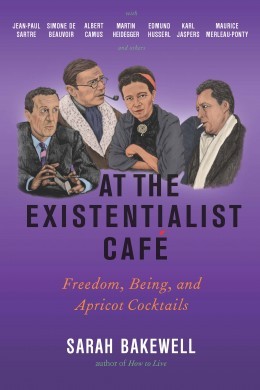
At The Existentialist Café
Sarah Bakewell
Pull up a chair alongside the rebels of mid-century Paris to discover how philosophy is forged not in textbooks, but through the messy reality of love, war, and political upheaval. By exploring the intertwined lives of thinkers like Sartre and Beauvoir, you will learn to navigate the weight of absolute freedom and understand why the pursuit of an authentic life remains our most urgent individual responsibility.
The Apricot Cocktail Revolution
The origin story of modern existentialism, starting with a 1932 meeting in a Paris bar where phenomenology was introduced as a way to turn life into philosophy.
The Philosophy of the Moment
To the Things Themselves
The Magician of Messkirch
Radical Freedom and the Void
Jean-Paul Sartre's early breakthrough, focusing on the dizzying nature of human freedom and the nausea that accompanies it.
The Horror of Existence
The Trap of Bad Faith
The Look of the Other
The Castor and the Ethics of Ambiguity
The life and work of Simone de Beauvoir, exploring how she applied existentialism to gender and ethics.
The Ethics of Freedom
Woman as the Other
The Philosophy of the Couple
Resistance and Engagement
How World War II transformed existentialism from a private philosophy into a call for political action.
Philosophy Under Occupation
The Age of Engagement
The Existentialist Boom
The Absurd and the Rebel
The rise and eventual fall of the friendship between Sartre and Albert Camus over politics and violence.
The Myth of Sisyphus
The Great Schism
A Plague of Morals
The Body and the World
Maurice Merleau-Ponty's contribution to existentialism, focusing on perception and the physical body.
The Primacy of Perception
Flesh of the World
The Political Body
The Decline and Legacy
The transition from existentialism to structuralism and why these thinkers still matter today.
The Death of the Subject
The Totalizing Critique
Why Existentialism Still Matters
Start reading with AI
Interactive Socratic dialogue, level by level